

Lead Time Is Set Before Production Starts
When a custom bag order runs late, the delay is usually attributed to the factory floor. In practice, most late deliveries were determined weeks earlier, during artwork approval and sampling, and simply became visible at the end. Understanding where lead time is actually consumed is the difference between a supplier who can commit to a date and one who is estimating.
The Five Stages of a Custom Bag Order
A custom drawstring bag or zipper pouch passes through five stages, and they do not compress equally.
- Brief and specification. Material, dimensions, bag structure, drawstring type, lining, coating, colour and logo method are fixed. Incomplete specifications are the single largest source of downstream delay, because every gap becomes a question during production.
- Artwork and print preparation. Logo files are checked for resolution and colour separation, and print position is set against the actual bag dimensions. Time here depends almost entirely on how quickly the buyer returns approvals.
- Sampling and approval. The physical sample is produced and shipped for sign-off. On custom work this is the stage buyers most often underestimate, particularly when the sample must be couriered internationally.
- Material procurement and layout. Fabric is allocated to the order and cutting is planned. Where material is a stocked fabric this is fast; where it is a special colour or a recycled-content grade, it can dominate the schedule.
- Production, inspection and packing. Cutting, sewing, printing, inspection and packing. This is the stage buyers watch, and typically the least variable of the five.
Why Seasonality Matters More Than Distance
Two orders placed a week apart can have materially different lead times for reasons that have nothing to do with distance or factory efficiency.
The first factor is the calendar. Spring festival and mid-autumn periods compress available production days, and orders placed ahead of those windows queue behind everything already committed. The second is carrier capacity around peak retail seasons, which affects sampling courier time and final shipment booking rather than manufacturing itself. The third is material availability: standard cotton and canvas are normally stocked, while RPET grades and specific velvet weights may need to be sourced, and that purchasing lead time sits inside the order lead time.
A realistic lead time estimate therefore has to account for when the order falls, not only for how much of it there is.
Why a Single Workflow Shortens the Chain
Shenzhen has become one of the world's densest concentrations of textile packaging manufacturing, largely because material sourcing, dyeing, printing, sewing hardware and logistics all exist within a short radius. The practical advantage for buyers is not simply lower cost but fewer handoffs.
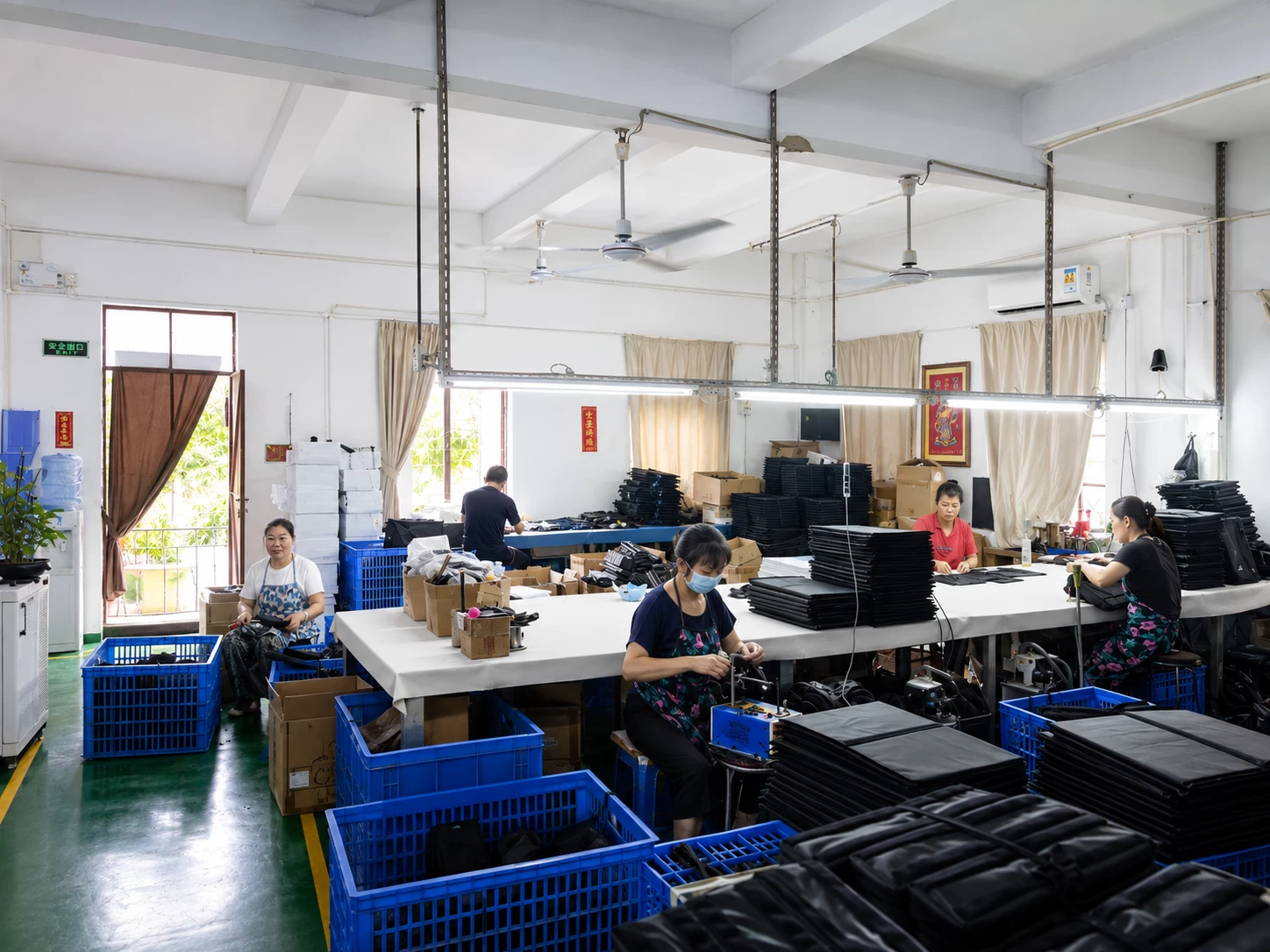
When material selection, pattern development, sewing, printing, inspection and final packing run inside one production workflow, problems surface at the stage where they occur rather than being discovered when a subcontractor's output arrives. A print registration issue found during printing is a same-day correction. The same issue found after the goods have moved between facilities is a rework cycle measured in weeks.

How to Get a Lead Time You Can Rely On
- Fix the full specification before requesting pricing. Material, dimensions, structure, drawcord, lining, coating, colour and logo method are all lead-time variables.
- Ask for the lead time broken down by stage, not as a single number. A supplier who can only give one figure is guessing.
- Confirm the sample approval turnaround separately and understand that it is partly your own clock.
- Ask whether materials are stocked or sourced per order, and what that adds.
- Check the delivery window against the production calendar, including major holidays, before committing to a retail date.
- Agree the shipping method early, because sea, air and courier options carry very different total timelines and costs.
Where Sinai Fits
Minghaoning (Shenzhen) Industrial Co., Ltd. was established in Shenzhen in 2020 and runs a complete production workflow from material selection and pattern development through sewing, printing, inspection and final packaging. Because those stages sit inside one factory rather than being split across subcontractors, we can quote lead time stage by stage and flag early when a material choice or a calendar window is going to extend the schedule. Send us your specification and target delivery date and we will tell you honestly where the risk sits.